3 Days in Southern Morocco: An Itinerary from Marrakech
Eric Hamblett, co-founder of TIZI
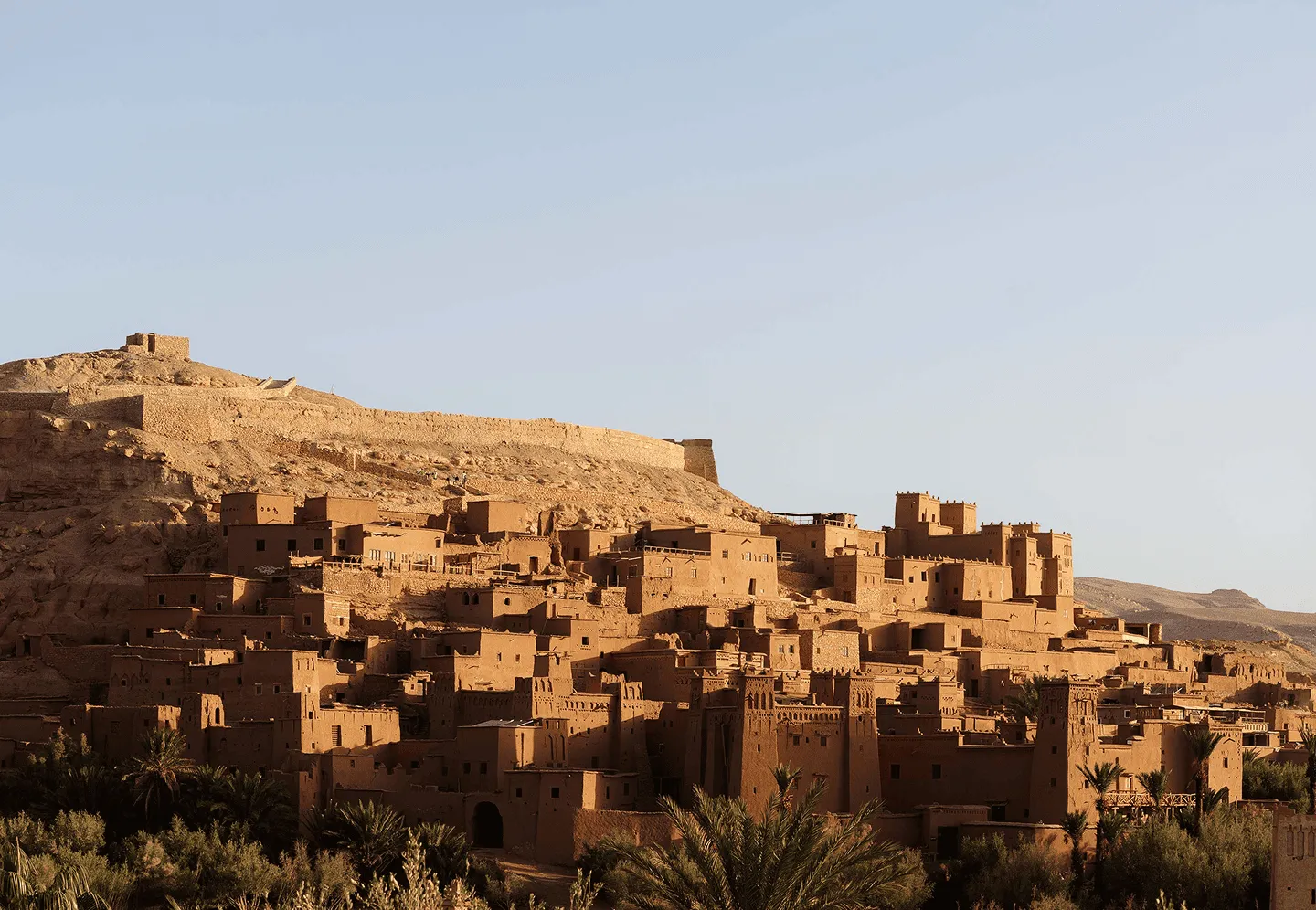
Three Days, One Region, No Rushing
Most southern Morocco itineraries try to fit the High Atlas, Aït Ben Haddou, the valleys and the Sahara into three days. The result is a lot of time in a vehicle and very little time anywhere.
This itinerary does the opposite. It focuses on the High Atlas and the region around Aït Ben Haddou, with one base and time to see things at the right hour.
The Plan at a Glance
- Day 1: Marrakech to Aït Ben Haddou over the High Atlas, via Telouet and the Ounila Valley. Sunset at the ksar.
- Day 2: A full day in Aït Ben Haddou: sunrise, the ksar, the salt caves or a ride, and the kasbah by night.
- Day 3: Ouarzazate and the Skoura palm grove, then back to Marrakech or onward south.
Base: two nights in Aït Ben Haddou.
Day 1: Over the High Atlas
Leave Marrakech in the morning and head south on the N9. The road climbs through the High Atlas to the Tizi n'Tichka pass, at about 2,260 m.
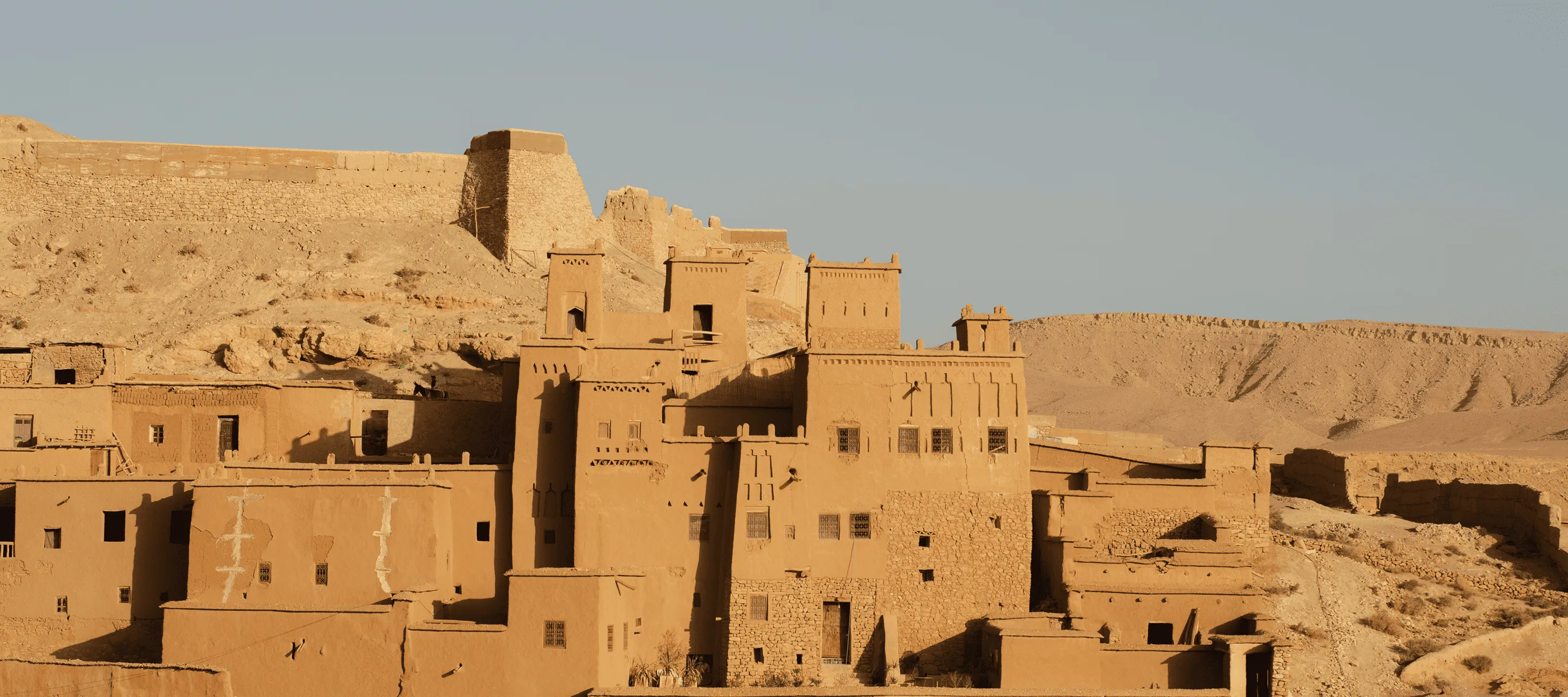
On the far side, leave the main road for Telouet and the Glaoui kasbah, then follow the old caravan route down the Ounila Valley, past Anemiter and Tamdaght, to Aït Ben Haddou. Our Ounila Valley guide covers the stops.
Arrive in the late afternoon, check in, and walk to the ksar for sunset. Dinner on the rooftop at TIZI Kitchen.
Getting there: TIZI's private shuttle runs in a six-seat vehicle; a Marrakech airport round trip is 2,500 MAD. See Marrakech to Aït Ben Haddou for all the options.
Day 2: A Full Day in Aït Ben Haddou
Sunrise
Walk out at first light, when the ksar is empty and the walls turn from grey to gold.
Morning
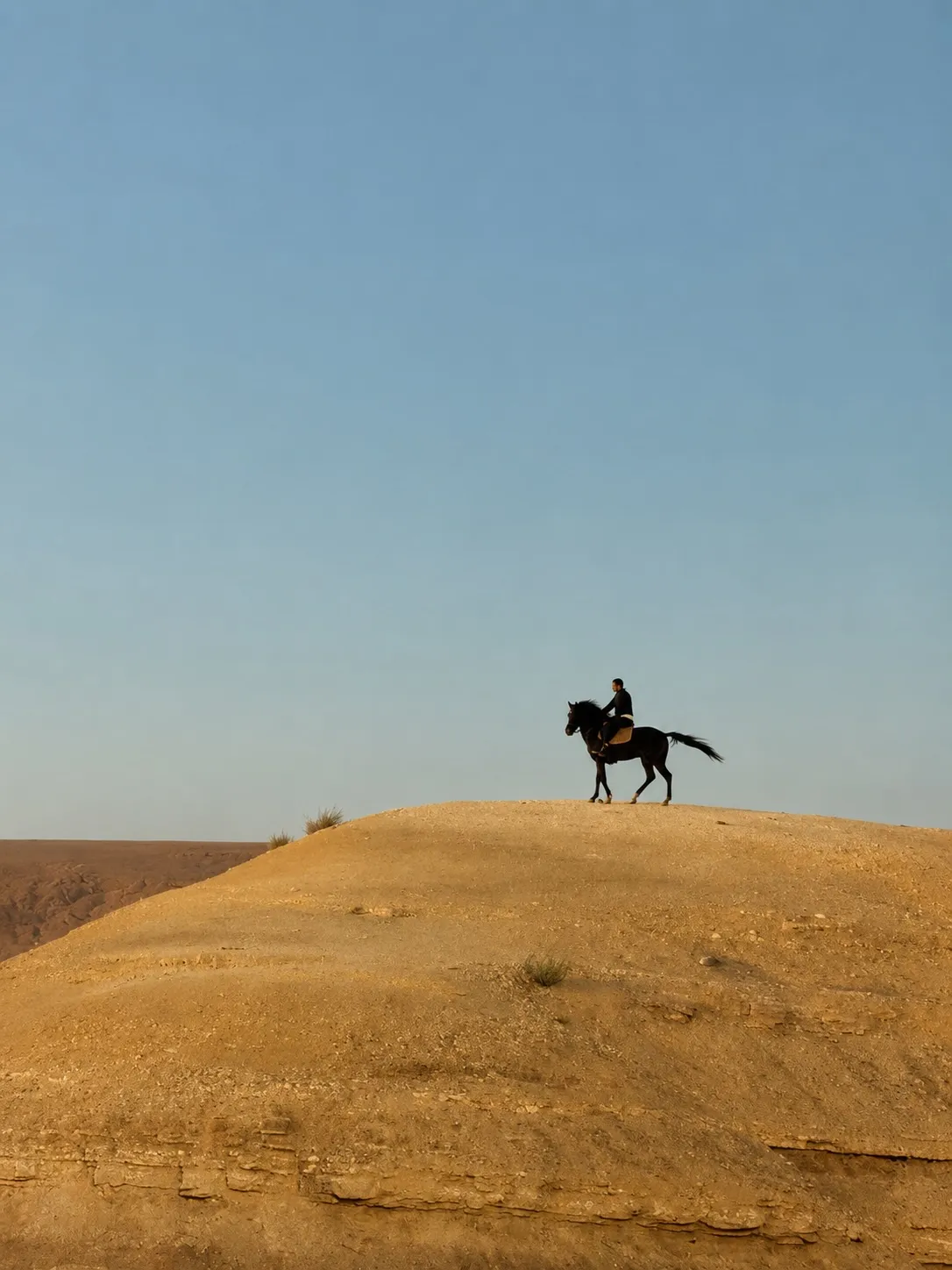
Explore the ksar properly on a guided heritage walk, or ride across the river and up to the ridge on horseback.
Afternoon
Rest through the midday heat, then head out to the Salt Caves & Secret Kasbah, or visit an artisan cooperative to see natural wool dyeing.
Evening
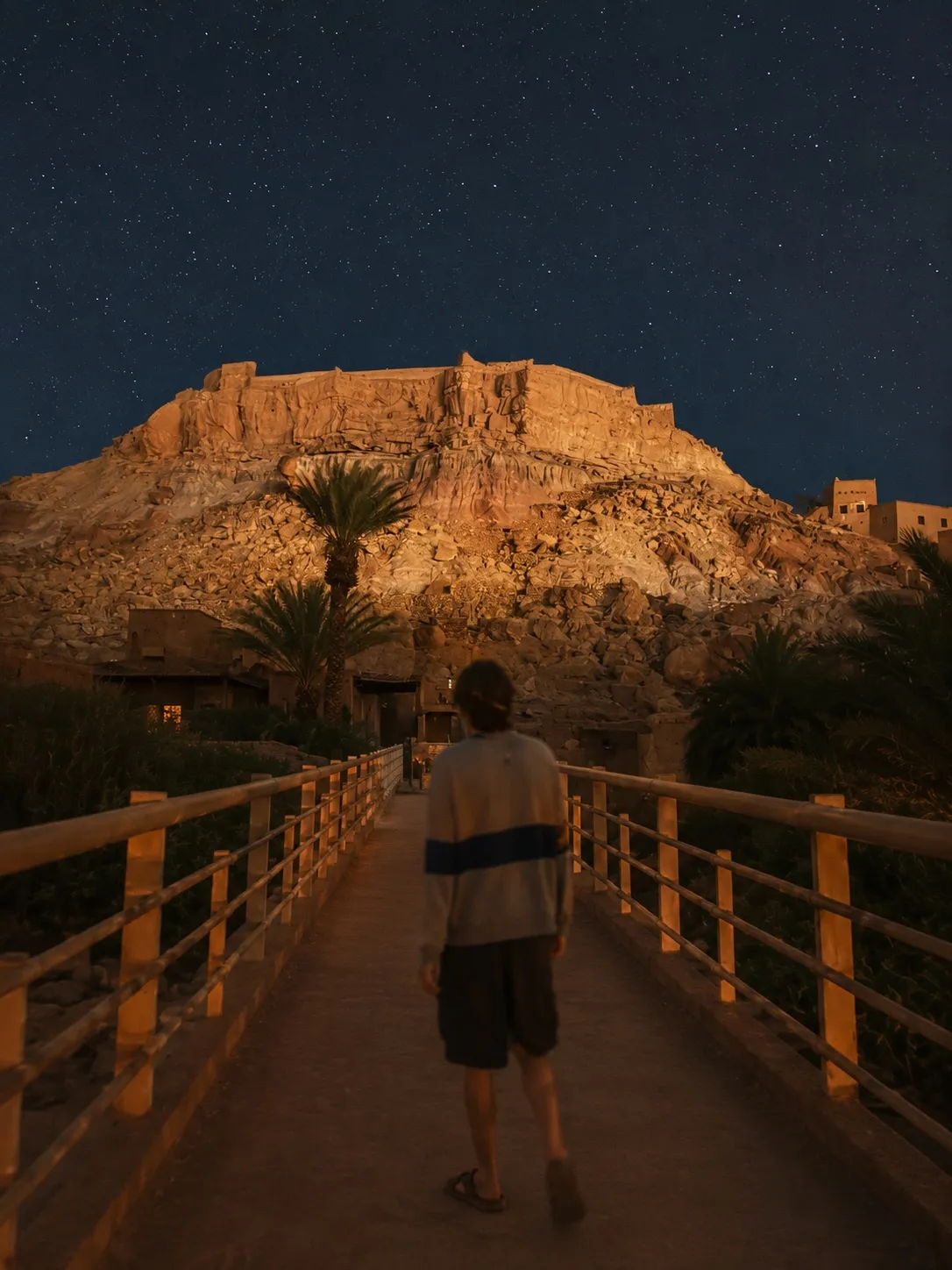
See the ksar after the crowds have left on Kasbah by Night, with dinner to end the evening.
Day 3: Ouarzazate and Skoura
After breakfast, drive about 30 minutes to Ouarzazate. Visit Taourirt Kasbah, one of the great Glaoui kasbahs, and the film studios on the edge of town if cinema is your thing.
Continue east to Skoura, a palm grove oasis dotted with old kasbahs. Walk among the palms and earthen walls before lunch.
From here, either return to Marrakech over the Tichka in the afternoon, or continue east towards the Dadès Valley and the desert.
Why Base Yourself in Aït Ben Haddou
Staying two nights in one place means unpacking once, seeing the ksar at the hours day visitors miss, and exploring the valleys at an easy pace.
It also puts you at the crossroads of the region: the High Atlas behind you, the Ounila Valley beside you, and Ouarzazate, Skoura and the routes to the desert ahead. Read more on where to stay in Aït Ben Haddou.
Make It Your Own
- More adventure: add quad biking or a half-day ride.
- More culture: add the Farm Tour or the artisan cooperative.
- Less driving: skip Day 3 and spend a third night in Aït Ben Haddou with a Valley Car Tour.
- Groups and retreats: contact us to plan a private programme.
3-Day Southern Morocco FAQ
Can you see the Sahara in 3 days from Marrakech?
It is possible, but it means long days on the road. This itinerary focuses on the High Atlas and Aït Ben Haddou instead, so you spend more time in places than between them.
Where should I stay?
Two nights in Aït Ben Haddou, the natural base for the region.
When is the best time to go?
Spring and autumn have the most comfortable temperatures. Summer is hot in the middle of the day, and the Tichka pass can see snow in winter.
Do I need a car?
Not necessarily. TIZI can arrange a private shuttle from Marrakech, and our experiences start from the hotel.
Final Thought
Three days is not long. Spend them in one place, at the right hours, and southern Morocco will feel much bigger than a checklist.
Ready to plan? Book directly with TIZI for our best rates.
ATLAS RUGS
Discover original, one-of-a-kind Moroccan rugs handwoven in the Atlas Mountains, where tradition, craftsmanship, and storytelling are passed down through generations.
Each rug is made from natural wool, dyed with time-honored techniques, and carries the unique symbols and spirit of the Amazigh artisans who create them.
Sourced directly from small weaving communities, TIZI rugs are authentic, ethical, and imperfect in the most beautiful way-no two are ever the same.