Ounila Valley Guide: The Old Caravan Road to Aït Ben Haddou
Jamal El Kachir, co-founder of TIZI and local guide
The Valley Most Travellers Drive Past
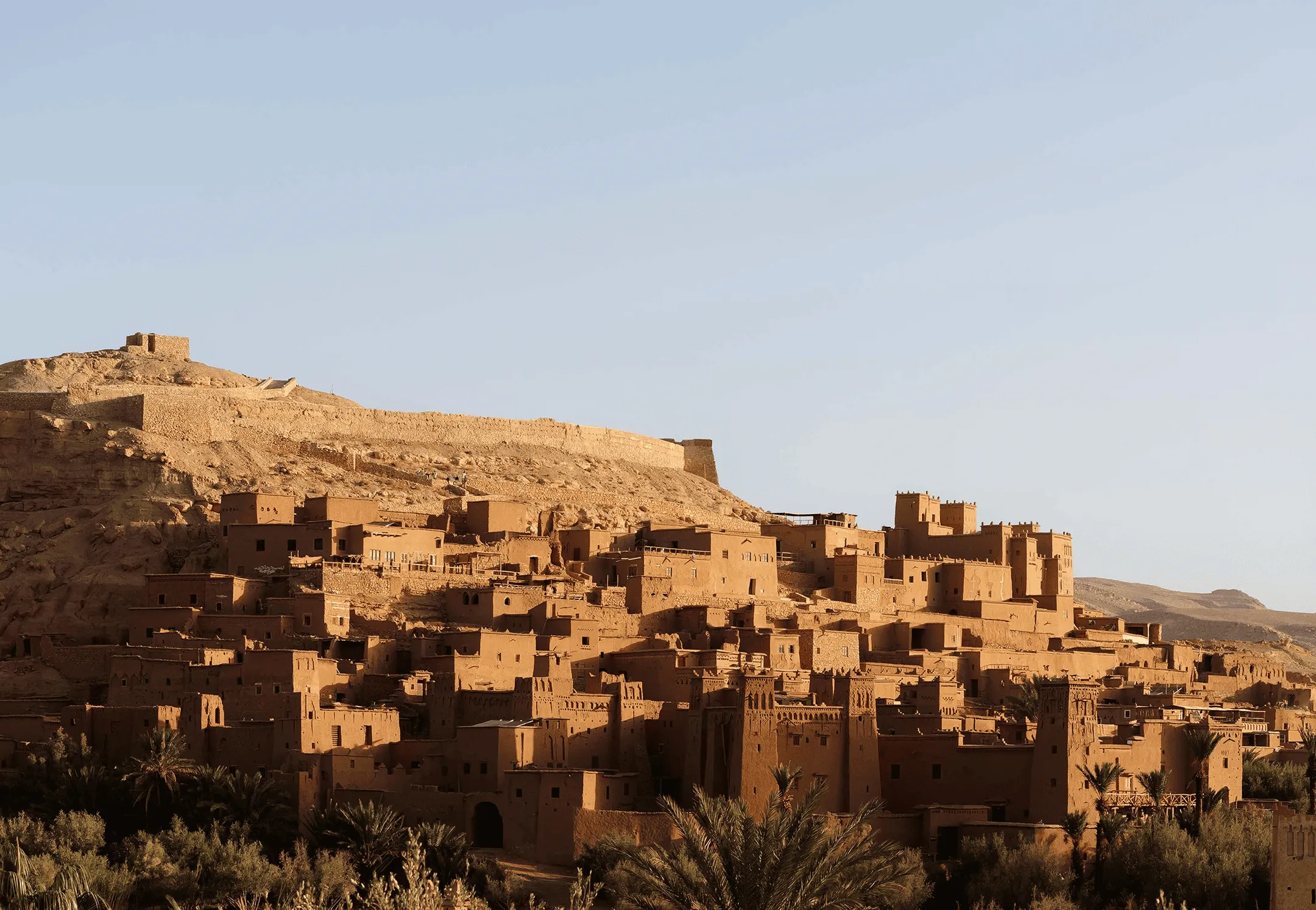
Almost everyone who visits Aït Ben Haddou arrives on the N9, the main road over the High Atlas. Very few take the older route that runs behind it.
That route is the Ounila Valley: a narrow river valley that runs from Telouet, in the high mountains, down to Aït Ben Haddou. For centuries it was the road that mattered. Caravans carrying salt, gold and goods between the Sahara and Marrakech came this way, and the families who controlled it built kasbahs along the river to guard it.
Today it is one of the quietest and most beautiful corners of southern Morocco.
A Short History of the Ounila
Before the modern road over the Tizi n'Tichka pass was built in the 1930s, the Ounila Valley was the main passage between Marrakech and the south. Whoever held it collected tolls from the trade that passed through.
In the twentieth century that power belonged to the Glaoui family, whose kasbah at Telouet still stands at the top of the valley. When the new road opened, traffic moved away and the valley grew quiet. Its kasbahs and ksour were left to the river, the fields and the slow work of time.
That is exactly what makes it worth seeing now.
What to See Along the Way
Telouet Kasbah
At the top of the valley, the former seat of the Glaoui family. Much of it is crumbling, but the restored reception rooms still show the carved cedar, painted ceilings and tilework of its peak.
Anemiter
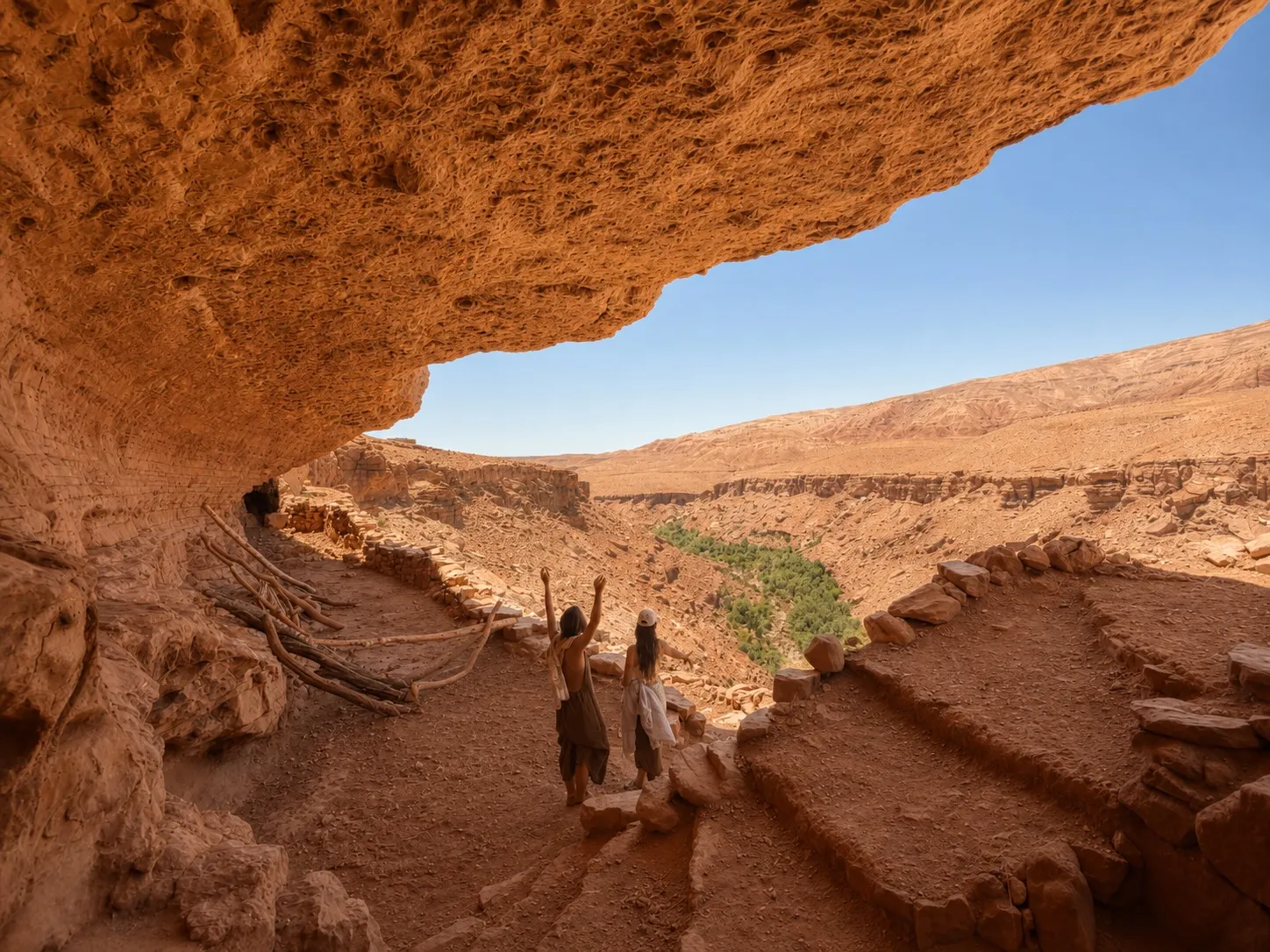
A short drive below Telouet, an earthen village set above green terraced fields. The landscape around it turns red, ochre and violet in the late afternoon.
The Ounila Villages
Between Anemiter and Tamdaght, small villages cling to the valley walls above a ribbon of fields and walnut and palm trees. This is the stretch to take slowly.
Tamdaght
Just above Aït Ben Haddou, another Glaoui kasbah, its towers slowly returning to the earth they were built from.
Aït Ben Haddou
The valley ends at the UNESCO-listed ksar, where the Ounila meets the plain. Arriving this way, through the old road, makes far more sense of why it was built here.
How to Travel the Valley
From Marrakech, follow the N9 over the Tizi n'Tichka pass and take the turn-off towards Telouet on the far side. From there the valley road leads down to Aït Ben Haddou.
The road is paved, but narrow and uneven in places, and slower than the main road. Allow a few extra hours to stop in the villages rather than treating it as a shortcut. After heavy rain, ask locally about conditions before you set off.
If you would rather not drive, our Valley Car Tour takes you through the valleys around Aït Ben Haddou with a local guide, from one hour to a half day.
Exploring the Ounila from Aït Ben Haddou
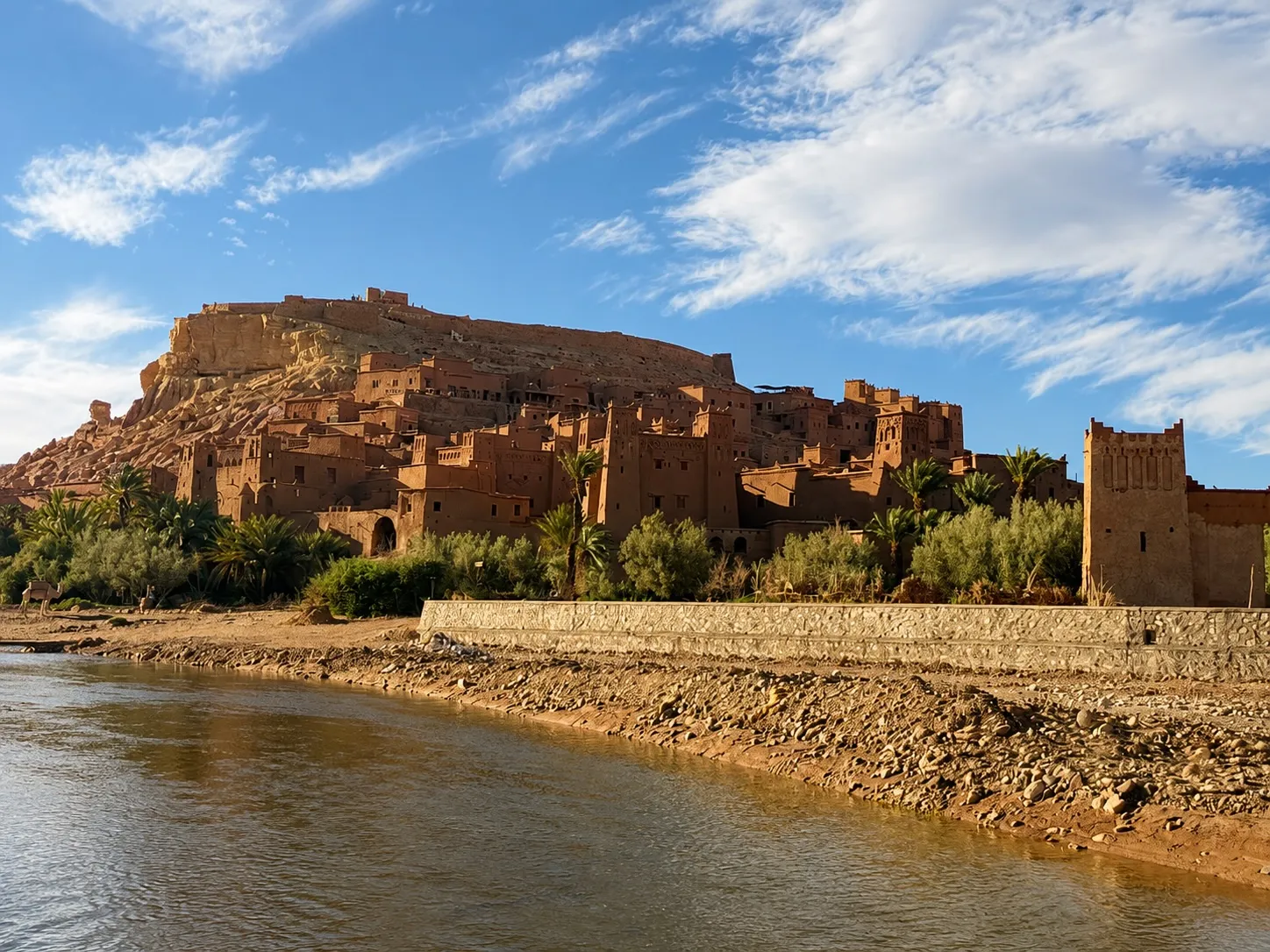
The lower Ounila begins right at Aït Ben Haddou, which makes the village the natural base for exploring it. A few ways to see the valley from TIZI:
- Horseback riding across the Ounila riverbed and up to the ridge above the ksar, from one hour to a half day.
- Salt Caves & Secret Kasbah, a half day between lantern-lit salt caves and a hidden kasbah in the valley.
- Quad biking on the open tracks around the village.
- Walking the riverbank at first light, before the day visitors arrive.
When to Go
Spring is the valley at its greenest, with fields in full growth and almond and fruit trees in blossom. Autumn brings softer light and harvest season. Summer days are hot, so explore early and late. In winter the high end of the valley near Telouet can be cold, and snow on the Tizi n'Tichka can occasionally close the pass for a short time.
Whatever the season, the best light is early morning and late afternoon, when the red walls of the valley glow.
Where to Stay
The Ounila rewards travellers who stay rather than pass through. Sleeping in Aït Ben Haddou puts you at the mouth of the valley, with the ksar a short walk away at sunrise and sunset.
At TIZI, our rooms, rooftop and kitchen are a base for exploring the valley at your own pace. Read more on where to stay in Aït Ben Haddou.
Ounila Valley FAQ
Where is the Ounila Valley?
In the southern High Atlas, running from Telouet down to Aït Ben Haddou, between Marrakech and Ouarzazate.
Can you drive the Ounila Valley in a normal car?
The road is paved, but narrow and uneven in places. Drive slowly, avoid it after heavy rain, and ask locally about conditions.
How long do you need?
Allow at least half a day to drive it with stops. Staying a night in Aït Ben Haddou lets you explore the lower valley without rushing.
Is the Ounila Valley worth it compared with the main road?
Yes, if you have the time. It is quieter, greener and richer in history than the main road, and it was the original route to Aït Ben Haddou.
Final Thought
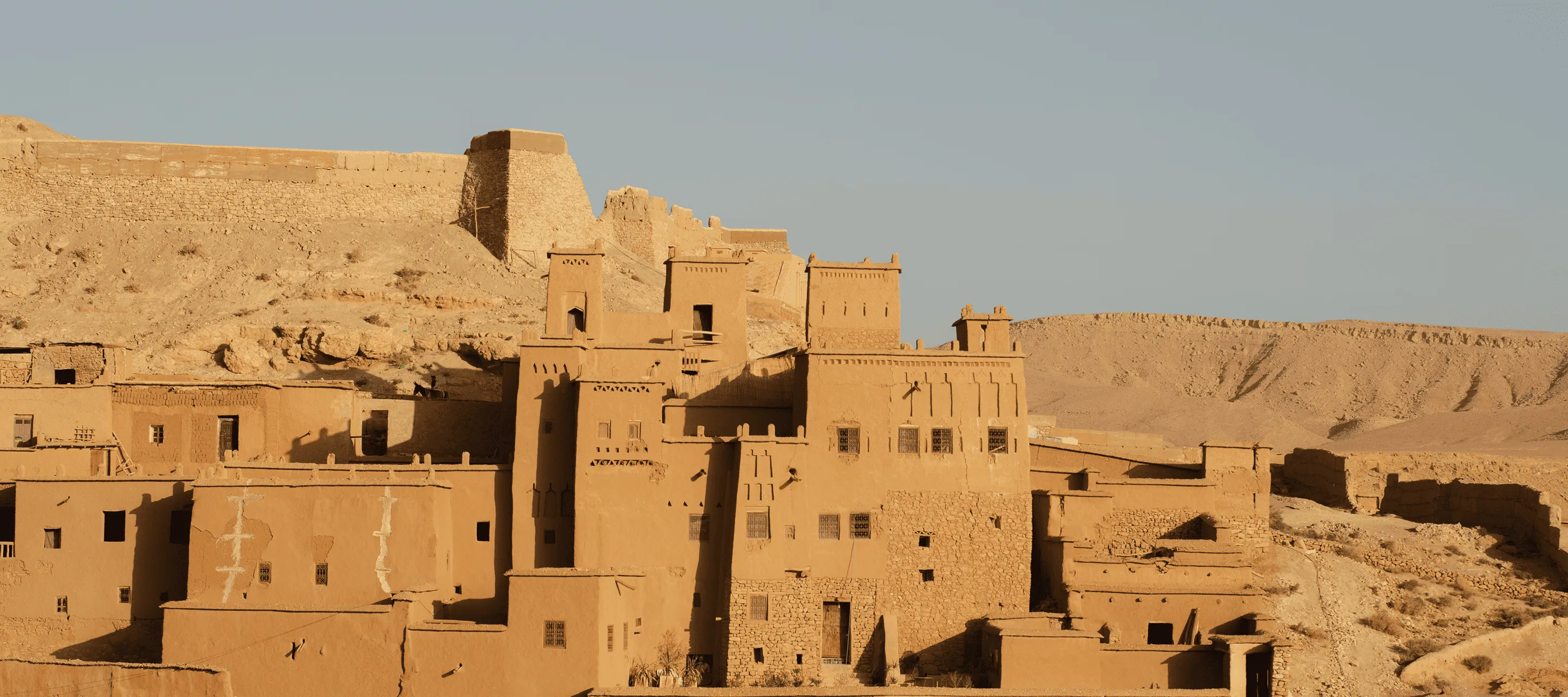
The Ounila Valley is where Aït Ben Haddou's story begins. Take the old road, stop in the villages, and arrive the way the caravans did.
Planning your stay? Book directly with TIZI for our best rates.
ATLAS RUGS
Discover original, one-of-a-kind Moroccan rugs handwoven in the Atlas Mountains, where tradition, craftsmanship, and storytelling are passed down through generations.
Each rug is made from natural wool, dyed with time-honored techniques, and carries the unique symbols and spirit of the Amazigh artisans who create them.
Sourced directly from small weaving communities, TIZI rugs are authentic, ethical, and imperfect in the most beautiful way-no two are ever the same.